Why Etching Beats Printing for Durability
With surface-printed nameplates (screen print, digital print, or any method that applies ink to the top surface) the ink can wear, fade, or be scraped off. The harder the service environment, the shorter the life of the printed image.
Etched nameplates solve this by removing metal rather than adding ink. The image is physically cut into the substrate itself. Even when exposed to abrasion, solvents, UV, or thermal cycling that would destroy a printed label, an etched nameplate keeps its identity because the identity is the metal.
Gallery
TWO METHODS
Chemical Etching
A chemical etch uses acid-resistant masking over the substrate, then exposes the unmasked areas to an etching solution that removes metal to a controlled depth. Typical etch depths are .003" - .005" for general use, deeper for special applications. The recessed areas can then be filled with durable ink or enamel in one or more colors, producing a high-contrast image that's both physically and visually permanent.
Chemical etching is the industry standard for:
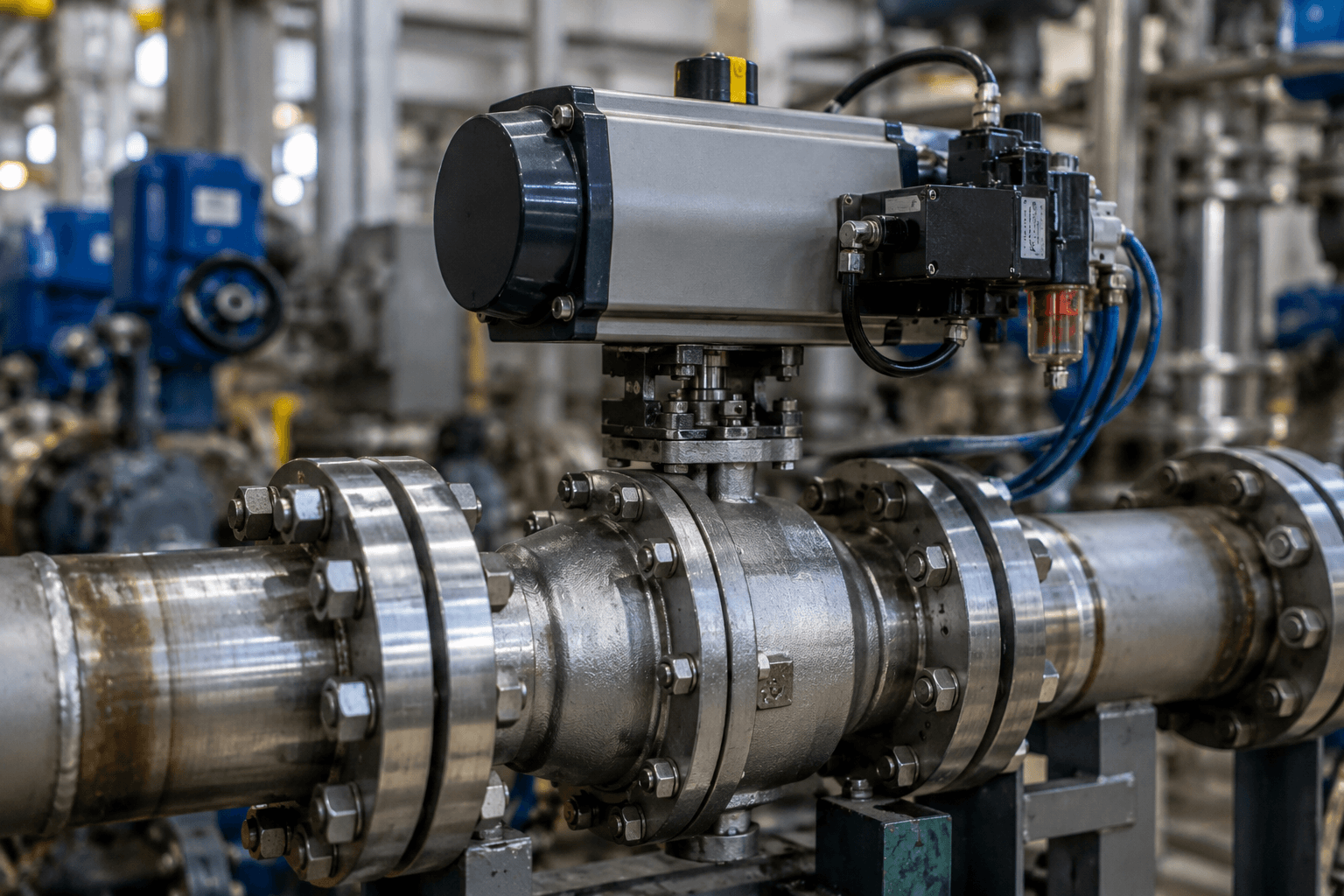
- Valve tags and process identification where tags face continuous wash-down and chemical exposure.
- Industrial rating plates that must remain legible through decades of equipment service.
- Marine, offshore, and coastal applications where saltwater exposure is continuous.
- Food, beverage, and pharmaceutical equipment where sanitation procedures would destroy printed markings.
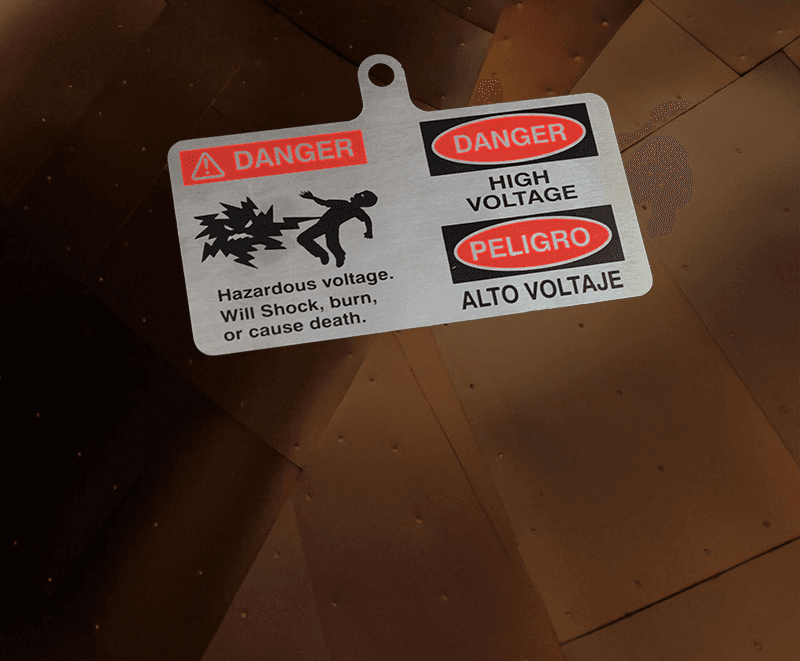
- Warning and safety labels that must remain legible indefinitely per ANSI Z535.
Laser Etching
Laser etching (also called laser marking or laser engraving) uses a focused fiber or CO2 laser beam to vaporize the surface of the substrate, creating a permanent contrast mark without any chemicals, masks, or color fill.
It's the preferred method for:
- 2D Data Matrix codes, QR codes, and variable data: including MIL-STD-130 UID compliant codes.
- Fine detail and small type: Laser etching resolves detail that chemical etching can struggle with.
- Variable data runs: Serialized nameplates where every piece has unique content.
- Prototype and short-run production where chemical etching's setup costs don't amortize.
- Anodized aluminum: Laser marking on anodized aluminum produces a high-contrast image by selectively removing the anodic layer's color.
When to Choose Chemical vs Laser Etching
Choose chemical etching when:
- You need color in the etched image
- Production volume justifies the setup cost (typically 50+ pieces)
- The image contains large filled areas (solid logos, filled backgrounds)
- You need the deepest possible etch for maximum durability
Choose laser etching when:
- You need fine detail, small text, or 2D codes
- Variable data is required (serialization, MIL-STD-130 UID)
- Production volume is small or prototype (laser has minimal setup)
- You don't need color contrast beyond the natural substrate/burned appearance
- You're marking anodized aluminum where laser selectively removes the dyed anodic layer
In some cases we combine both methods; chemical etching for the background image and laser etching for variable data like serial numbers.
Compliance
Etched nameplates from Holland Nameplate are produced under our ISO 9001:2015 certified quality management system. Etching is commonly specified for:
- UL Recognized Component Labels where UL 969 durability requirements exceed what surface printing can deliver
- MIL-STD-130 UID nameplates — laser etching on anodized aluminum or stainless produces the Grade B 2D Data Matrix required by the standard
- ASME code nameplates where etched rating data must remain readable through the equipment's pressure vessel life
- ANSI Z535 safety signs where warning information must remain visible through the equipment's service life
Frequently Asked Questions
Etching (chemical or laser) removes surface material to create an image. Engraving typically refers to mechanical engraving with a cutter or burr — similar result, different process, and generally slower than etching for larger production runs. Stamping physically deforms the metal to create raised or recessed characters, common for simple serial numbers and date stamps. Etching is the most common method for detailed, high-resolution industrial nameplate images.
Essentially yes, in nameplate context. "Laser engraving" sometimes implies a deeper cut than "laser etching," but both refer to laser-based marking that removes or transforms surface material. In practice, we calibrate laser marking to the depth and contrast appropriate for your application.
Standard etch depth is .003" to .005" for most industrial applications. Deeper etching (.010" or more) is available for specialty applications requiring tactile legibility, maximum durability, or deeper color fill capacity.
Chemical etching with color fill works on stainless steel. Laser etching typically produces a natural contrast mark on stainless (the laser oxidizes or vaporizes the surface) — typically gray, dark, or with a slight color shift depending on laser parameters. For color on stainless, chemical etching with fill is the standard approach.
Service life depends on substrate and environment, but etched stainless and anodized aluminum nameplates routinely last 25+ years in industrial service. The etching itself is effectively permanent — the limiting factor is usually physical damage to the nameplate or degradation of the color fill (for chemically etched color-filled plates in UV-exposed applications).
Yes. Multi-color chemically etched nameplates require sequential etch-and-fill operations but produce excellent high-contrast images suitable for safety labels, complex logos, and premium OEM identification.
Laser etching can resolve detail down to under .010", including fine text and 2D codes. Chemical etching's minimum detail depends on the mask technology but generally supports features down to about .015" – .020".
Yes. Laser etching on anodized aluminum and stainless steel produces MIL-STD-130 compliant 2D Data Matrix codes at the quality grade the standard requires.
Request a quote for etched nameplates
Send us your specification and we'll reply with pricing and lead time.