Why lifting & rigging tags are different
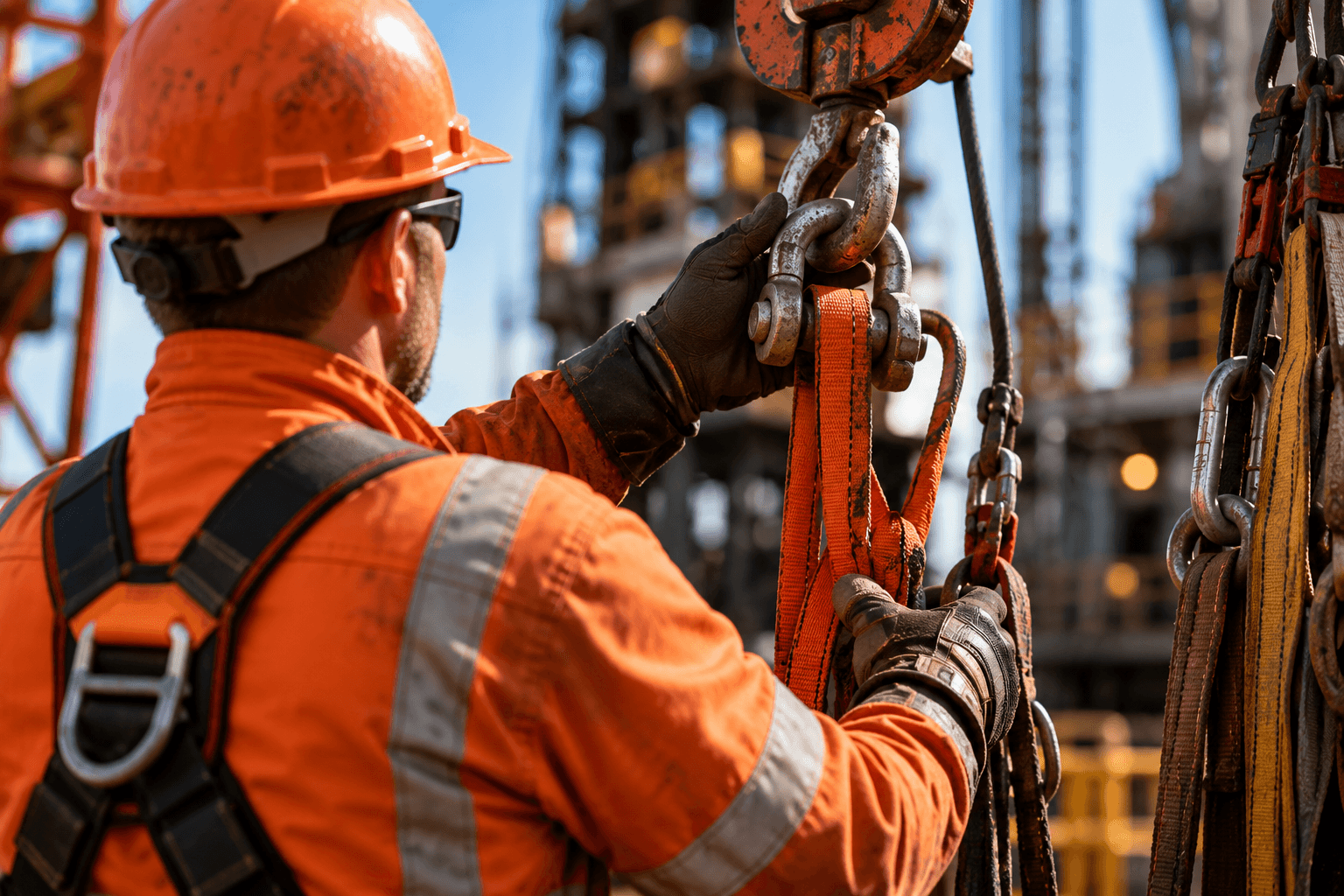
Lifting and rigging is a regulated industry. ASME B30 standards and OSHA 29 CFR 1910.184 require that slings carry durable, permanent identification showing rated capacity, manufacturer, and traceability data — and that the identification remain legible throughout the sling's service life. A lost or illegible tag means the sling must be removed from service until it's re-identified or replaced.
The practical result: tags on lifting equipment need to survive:
- Cyclic loading: Tags attached to working slings see repeated flex, tension, and impact
- Abrasion: Tags rub against loads, rigging hardware, and other slings in storage
- Chemical exposure: Industrial environments mean solvents, cleaning chemicals, and corrosive atmospheres
- UV and weather: Outdoor rigging work exposes tags to sun, rain, and temperature extremes
- Contamination: Grease, oil, dust, and debris that accumulate on working equipment
Tag failure isn't cosmetic; it removes equipment from service and creates compliance gaps during OSHA or customer audits.
Products for lifting & rigging applications
Custom stainless steel sling tags
Our sling tags are durable stainless steel identification tags formed with reinforced attachment eyes designed for the loads and environments lifting equipment sees. Typical specifications:
- 304 or 316 stainless depending on environment (316 for marine, coastal, or chemical exposure)
- Chemical etching with color fill or laser etching for permanent, abrasion-resistant marking
- Thickness typically .032"–.063" for balance of durability and attachment flexibility
- Attachment options including chain links, wire rope ferrules, cable ties, and sewn-in configurations
Typical content on lifting tags:
- Manufacturer identification
- Serial number (unique per sling)
- Rated capacity (including reductions for basket, choker, and vertical hitches)
- Diameter and length
- Date of manufacture
- Inspection date markings (periodic re-tagging)
InfoChip ChainSlingTag
The ChainSlingTag combines human-readable identification with embedded RFID for digital asset tracking. Field technicians can scan the tag during periodic inspection, pulling up the sling's complete service history on a tablet or handheld reader (load test records, previous inspections, operator reports) without touching paperwork.
ButtonTag HF and UHF
Low-profile RFID tags specifically designed to be sewn into synthetic slings and safety harnesses without affecting the sling's rated capacity or causing wear points.
- ButtonTag HF: High-frequency, short read range, reliable in dense sling storage (data sheet)
- ButtonTag UHF: Ultra-high-frequency, longer read range for rapid inventory scans
DuraTab, DuraFob, MiniHangTag
Our Holland RFID line includes additional options for rigging asset identification:
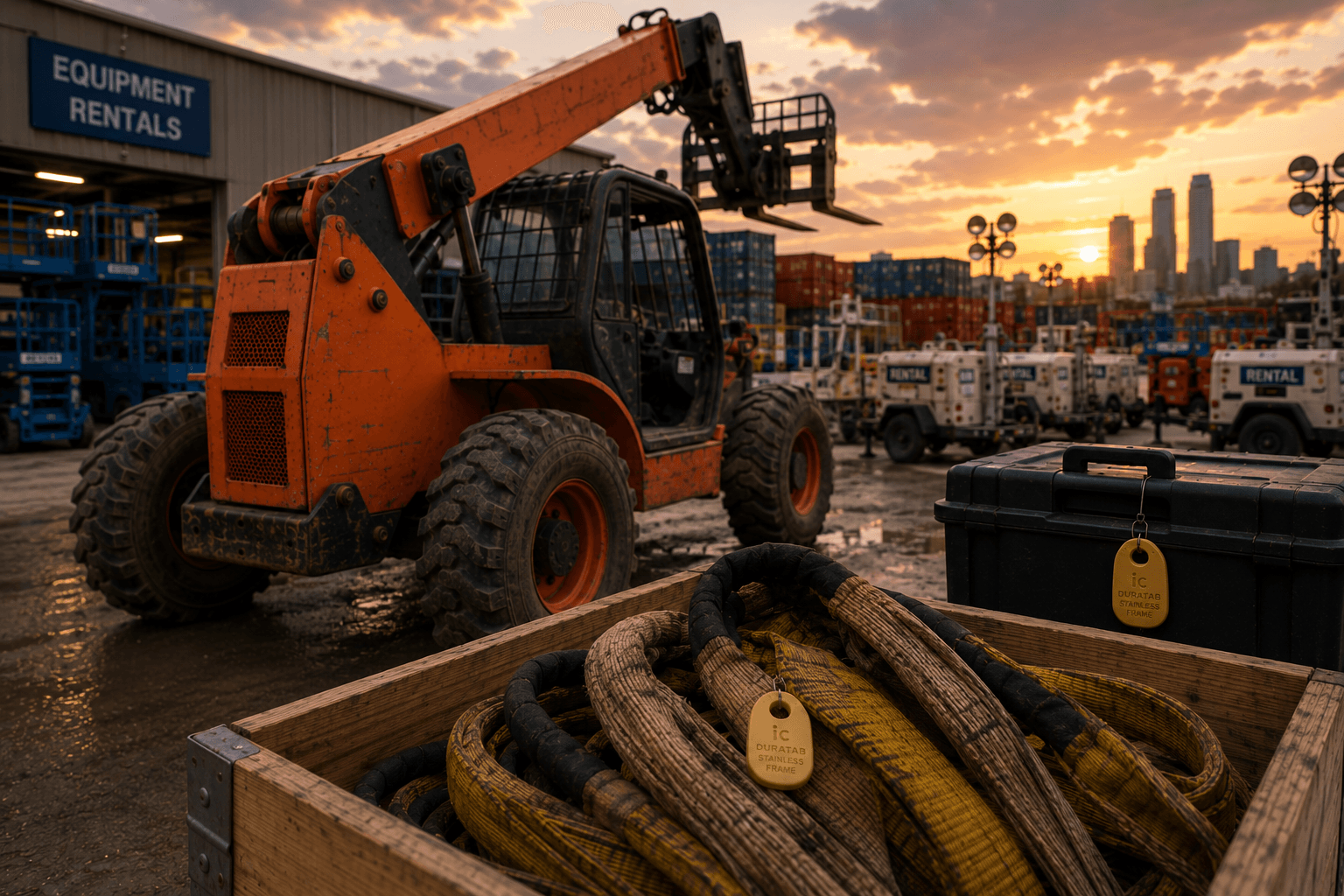
- DuraTab: Steel-framed hang or screw-on HF tag for rigging hardware, shackles, and fixed equipment
- DuraFob: Durable RFID-enabled key fob, useful for access control on lockable rigging storage
- MiniHangTag: UHF tag with up to 20 ft read range for rapid rigging yard inventory
Sample applications
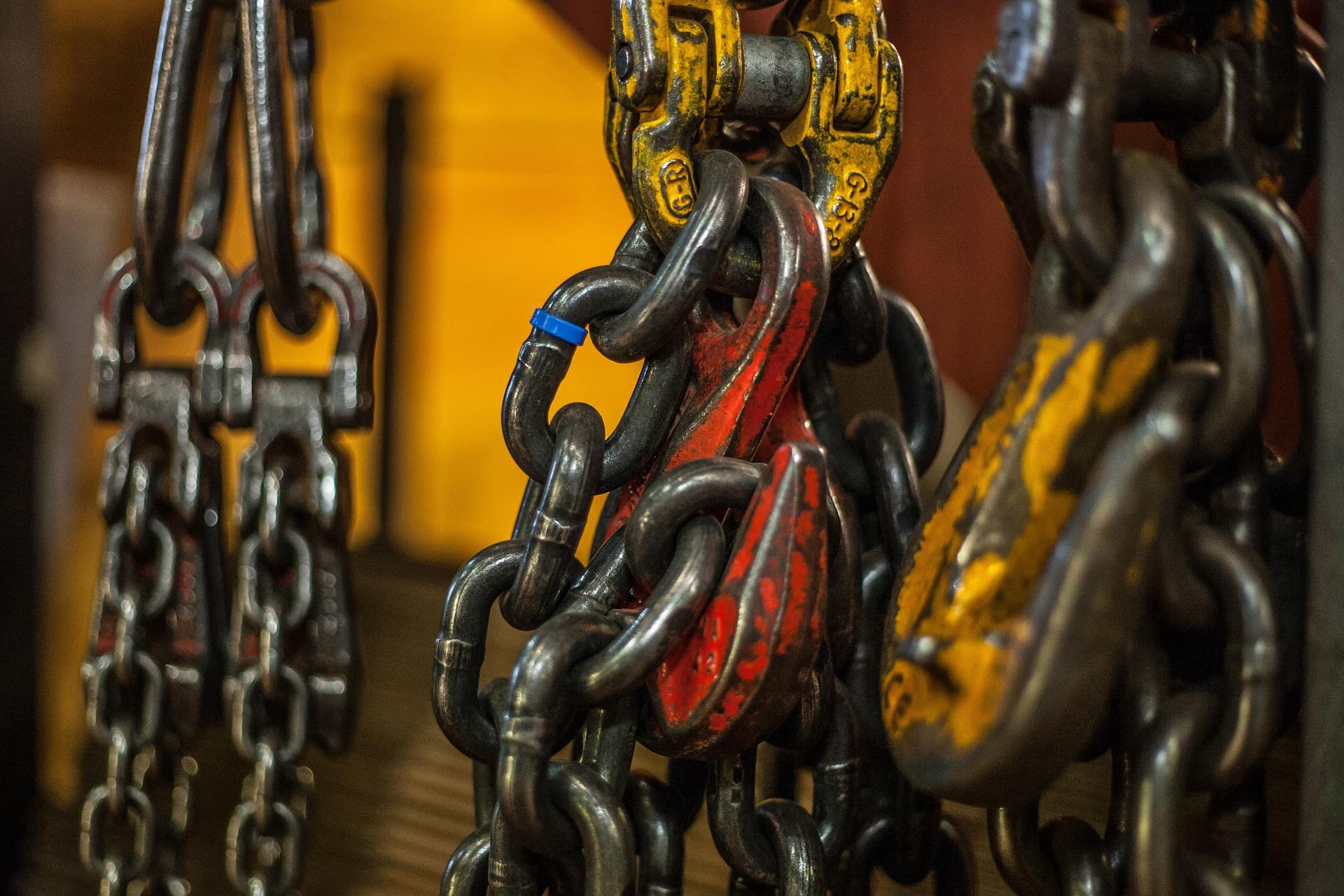
- Chain sling identification tags with ASME B30.9 rated capacity formatting
- Wire rope sling tags with ferrule-attached stainless identification
- Synthetic web sling ButtonTags sewn into the sling body
- Below-the-hook lifting device rating plates (spreader bars, magnets, C-hooks)
- Rigging hardware identification for shackles, turnbuckles, and hooks
- Overhead crane and hoist rating plates
- Rigging yard inventory identification with RFID for digital asset management
Compliance standards
Lifting & rigging customers routinely specify:
- ASME B30.9: Slings (chain, wire rope, synthetic web, round)
- ASME B30.10: Hooks
- ASME B30.20: Below-the-hook lifting devices
- ASME B30.26: Rigging hardware (shackles, turnbuckles, links)
- ANSI Z535: Safety and warning labels on lifting equipment
- OSHA 29 CFR 1910.184: Federal regulation on slings, which incorporates ASME B30 requirements by reference
- ISO 9001:2015: Quality management, routinely required by major lifting equipment OEMs
Our stainless steel sling tag construction with chemical etching or laser etching produces identification that typically remains legible for the full working life of the sling; meeting the OSHA requirement that rating information be durable and readable throughout service.
What HNP brings to lifting & rigging nameplate specifications
- 5-day standard lead time with 98% historical on-time delivery: Sling shops running same-week production cycles depend on fast tag turnaround
- ISO 9001:2015 certified quality management for traceability and audit compliance
- Stainless steel specialization in 304 and 316 for durability in harsh industrial environments
- RFID integration via InfoChip's lifting-specific product line; ChainSlingTag, ButtonTag, DuraTab
- In-house US manufacturing since 1916 with full production traceability
- Custom shapes via laser fabrication: Tags matched to attachment method (chain link size, ferrule fit, sewn-in geometry)
- Serialization and variable data including unique per-sling serial numbers, barcodes, and 2D codes
- Periodic inspection tag programs: Some customers maintain annual or semi-annual re-inspection tag replacements; we support long-term recurring orders
Frequently asked questions
ASME B30.9 requires slings to be marked with manufacturer identification, serial number (or other identifier), rated capacities for the hitches (vertical, choker, basket), and material specifications. OSHA 1910.184 incorporates these requirements and requires that the marking be durable and legible throughout the sling's service life. Damaged or illegible tags require the sling to be removed from service.
304 stainless is suitable for most general industrial environments. For marine, coastal, chemical processing, or sour-service environments, upgrade to 316. For the harshest corrosion environments, specify at the quote stage and we can recommend specialty grades.
Chain sling tags typically attach via one of the chain links at the master link or through a dedicated tag link. We form stainless tags with reinforced attachment eyes sized to fit common chain diameters, with the eye geometry optimized to avoid stress concentrations.
Yes. For wash-down environments, recommend 316 stainless with chemical etching and color fill or laser etching without surface print layers. This combination resists the thermal cycling and chemical exposure of aggressive cleaning routines.
HF (high-frequency) has shorter read range (inches to about a foot) but is more reliable in dense storage where tags are close together, and penetrates water and organic materials better. UHF (ultra-high-frequency) has longer read range (up to 20+ feet) but can struggle in dense metal environments. For sling yards where you need to scan rapidly from distance, UHF is usually preferred. For individual sling inspection workflows, HF is often fine.
Yes. Many of our lifting & rigging customers run annual or semi-annual inspection tag refreshes — replacing inspection date tags without replacing the primary identification. We support recurring orders with consistent serial number continuity and formatting.
Yes. QR codes and 2D Data Matrix codes can be integrated into chemical etched or laser etched tags, linking to your maintenance management system for digital service history access.
Request a quote for lifting & rigging tags
Send us your specification and we'll reply with pricing and lead time.