What We Mean by “Industrial Nameplates”
"Industrial nameplate" is a broad category; it covers everything from a small adhesive serial number tag on a portable tool to a large riveted rating plate on a pressure vessel. What industrial nameplates share is the requirement to stay legible, attached, and identifiable through the service life of equipment that's working in real-world conditions: heat, vibration, chemicals, abrasion, dust, moisture, and sometimes all of the above at once.
Holland Nameplate manufactures industrial nameplates for:
- Electrical rating plates for panels, transformers, switchgear, and NEMA-rated enclosures.
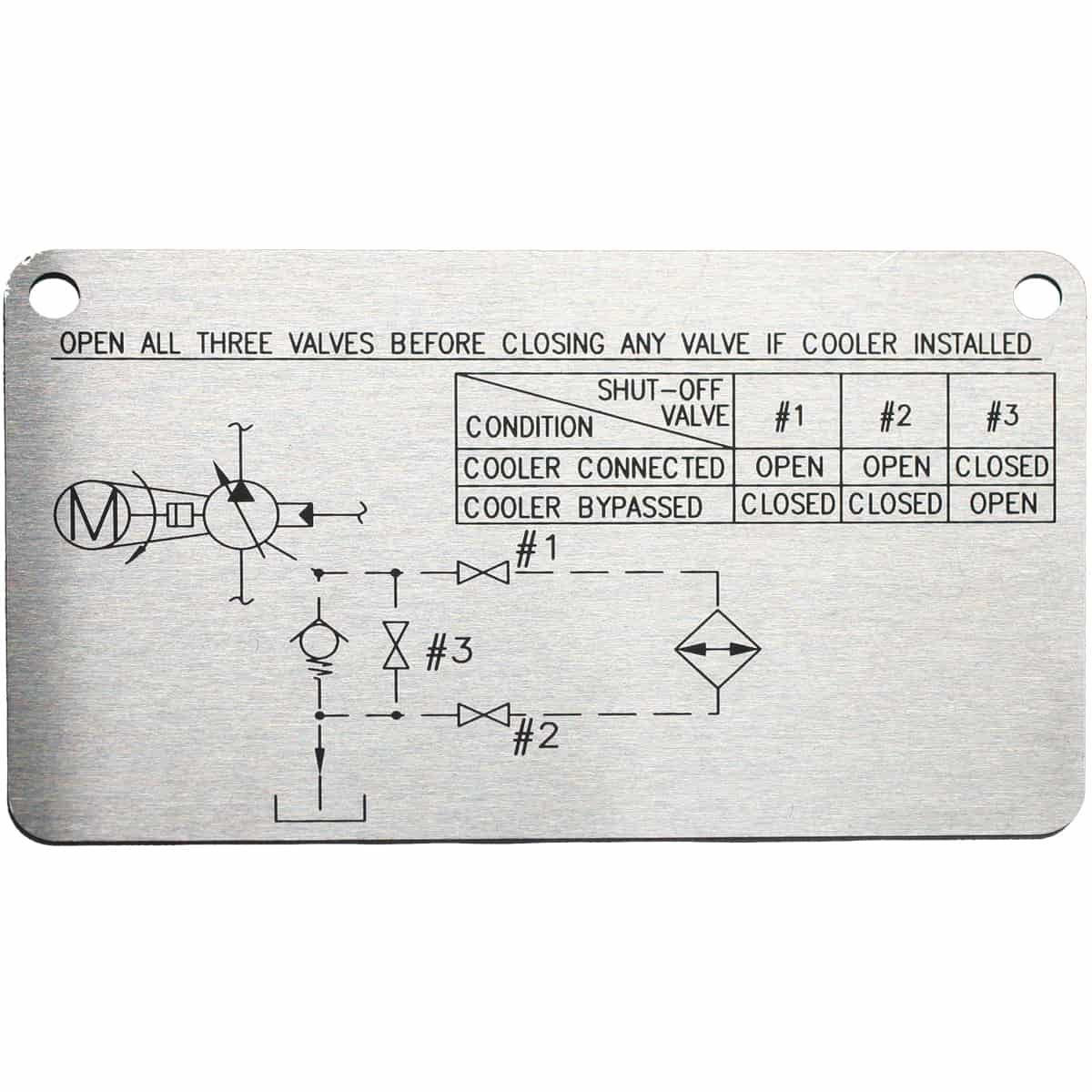
- Equipment rating plates on pumps, motors, compressors, generators, fans, gearboxes, and mechanical equipment.
- Asset identification tags for facility inventory, maintenance management systems (CMMS/EAM), and lifecycle tracking.
- Serial number and data plates with variable information including barcodes, QR codes, and 2D Data Matrix codes.
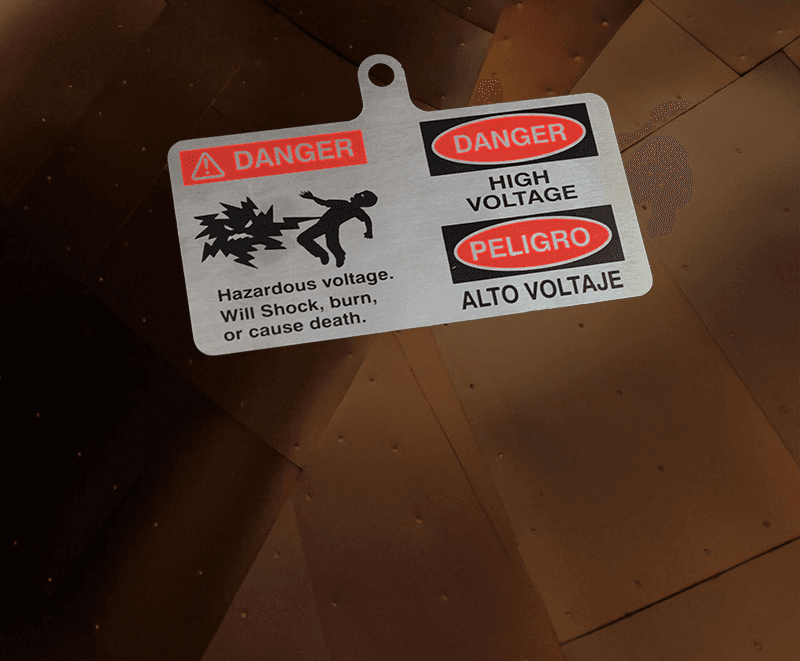
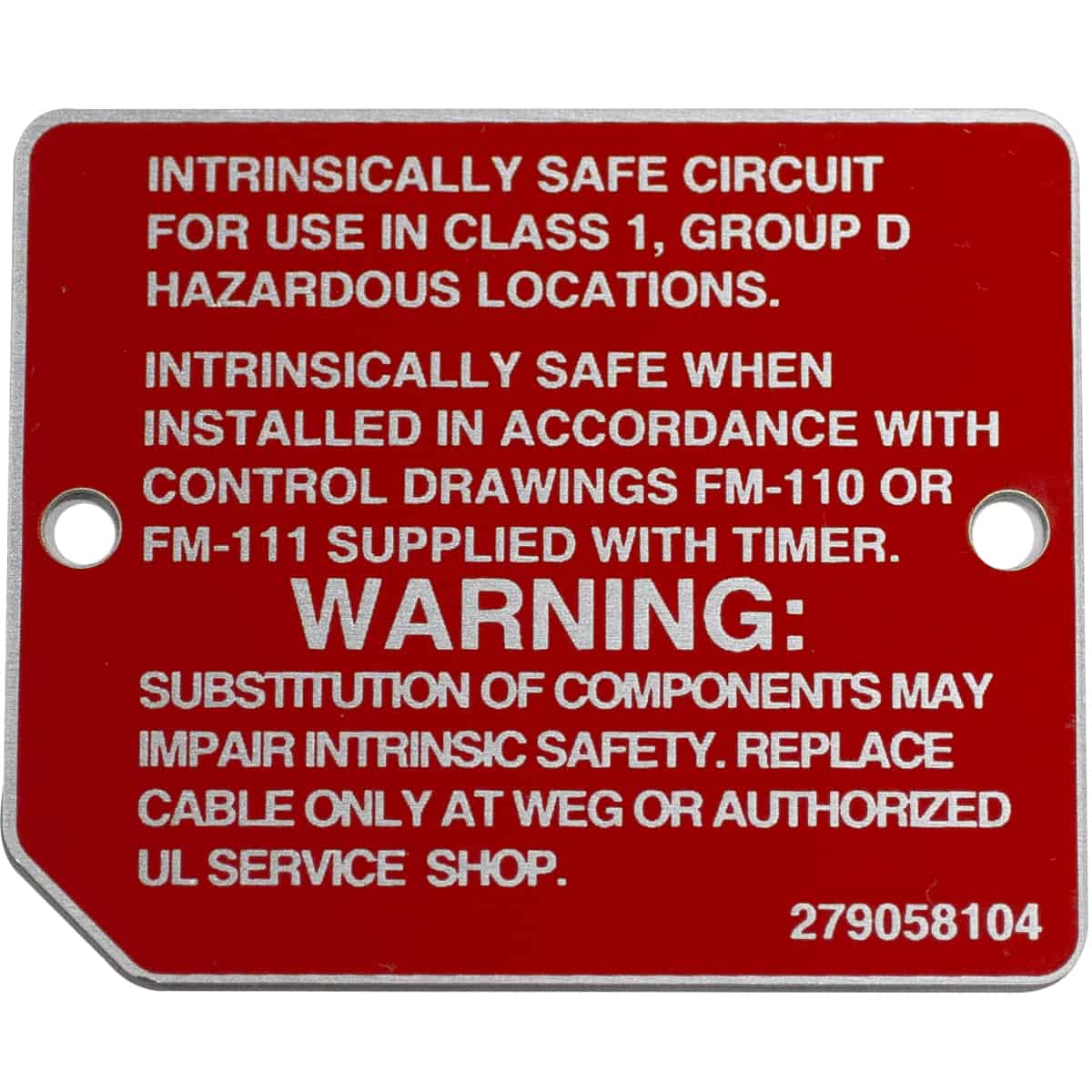
- Warning, caution, and safety labels per ANSI Z535 requirements.
- Compliance identification for UL Recognized Components, MIL-STD-130 UID, and ASME-code equipment.
- Valve tags and process equipment tags for plants using valve ID schemes.
- Lifting and rigging inspection tags per ASME B30 and OSHA requirements.
- Control panel identification matched to our Metal Control Panels production.
Gallery
Material Selection for Industrial Applications
The right substrate depends on the service environment. We produce industrial nameplates across several material families:
- Aluminum: The industrial default. Lightweight, corrosion-resistant, cost-effective, and the right call for most indoor and moderately exposed outdoor equipment
- Stainless Steel: For when aluminum isn't enough. 304 and 316 grades cover chemical exposure, marine environments, high heat, and tamper-resistant requirements.
- Anodized photosensitive aluminum: For photographic-quality imaging with high durability, available on request.
Not sure which substrate fits your application? Contact us at the quote stage and we'll recommend the right combination of material, thickness, finish, and marking method.
Marking Methods
Industrial nameplates can be marked by several methods, each with tradeoffs in cost, durability, and appearance:
- Chemical etching with color fill: The most durable option; etched into the metal and color-filled for contrast, with service life measured in decades.
- Laser etching: High-resolution, permanent, no color fill; the standard choice for Data Matrix/QR codes and serialized data.
- Screen printing: Cost-effective for larger runs with limited color variation.
- Digital printing: Best for lower-volume runs needing variable data or multiple colors.
- Embossing and debossing: Raised or recessed text for tactile identification.
Thicknesses and Attachment
Thickness range: .012" to .125" across all substrates.
Selecting thickness:
- .012" – .020": Thin substrates, typically adhesive-mounted on flat surfaces. Good for asset tags and lightweight component identification.
- .020" – .040": General-purpose thickness for most industrial nameplates. Rigid enough to handle handling and installation, flexible enough to conform to slightly curved surfaces if needed.
- .040" – .080": Heavier-duty applications, rating plates, rivet-mounted tags, equipment exposed to vibration.
- .080" – .125": Heavy industrial, cast-frame attachment, applications where the nameplate itself needs to resist impact.
Attachment: Pressure-sensitive adhesive (including high-performance 3M options), mounting holes for rivets/screws/drive pins/bolts, welded attachment for stainless steel, and chain/cable/tie-wire hang tags; combinations available where tamper-resistance or mechanical security is required.
Frequently Asked Questions
The difference comes down to service environment and durability expectation. An industrial nameplate is engineered to stay legible and attached through whatever the equipment it identifies experiences (years of outdoor exposure, chemical wash-down, mechanical abuse, high temperatures, or a combination) which requires deliberate substrate, marking method, and attachment selection.
Service life depends on substrate, marking method, and environment:
- Chemically etched stainless steel: 25+ years outdoors
- Laser-etched anodized aluminum: Typically 10-20 years outdoors
- Screen-printed aluminum in a protected indoor environment: Can last the life of the equipment
Ask at the quote stage for durability guidance specific to your application.
Yes, we produce nameplates formatted for ASME code stamp application, suitable for receiving the code symbol from the equipment manufacturer or Authorized Inspector.
Yes, we produce nameplates matched to NEMA 1, 3R, 4, 4X, 7, 9, 12, and other enclosure ratings, including the appropriate attachment method (gasketed, welded, or otherwise) for the enclosure's environmental rating.
Yes, our Safety Nameplates are formatted to the ANSI Z535 standard, covering warning, caution, and danger labels.
Yes, on request. Material certifications and Certificates of Compliance against your specified standards are available at the time of order.
Request a quote for industrial nameplates
Send us your specification and we'll reply with pricing and lead time.