When Stainless Steel Is the Right Choice
Stainless steel is the go-to nameplate substrate when aluminum isn't enough. It resists corrosion, survives aggressive chemicals, tolerates higher service temperatures, and holds up under mechanical abuse that would destroy softer metals. It's also the default specification for outdoor installation that sees saltwater or chloride exposure.
Holland Nameplate produces stainless steel nameplates for:
- Offshore and marine equipment where saltwater exposure is continuous.
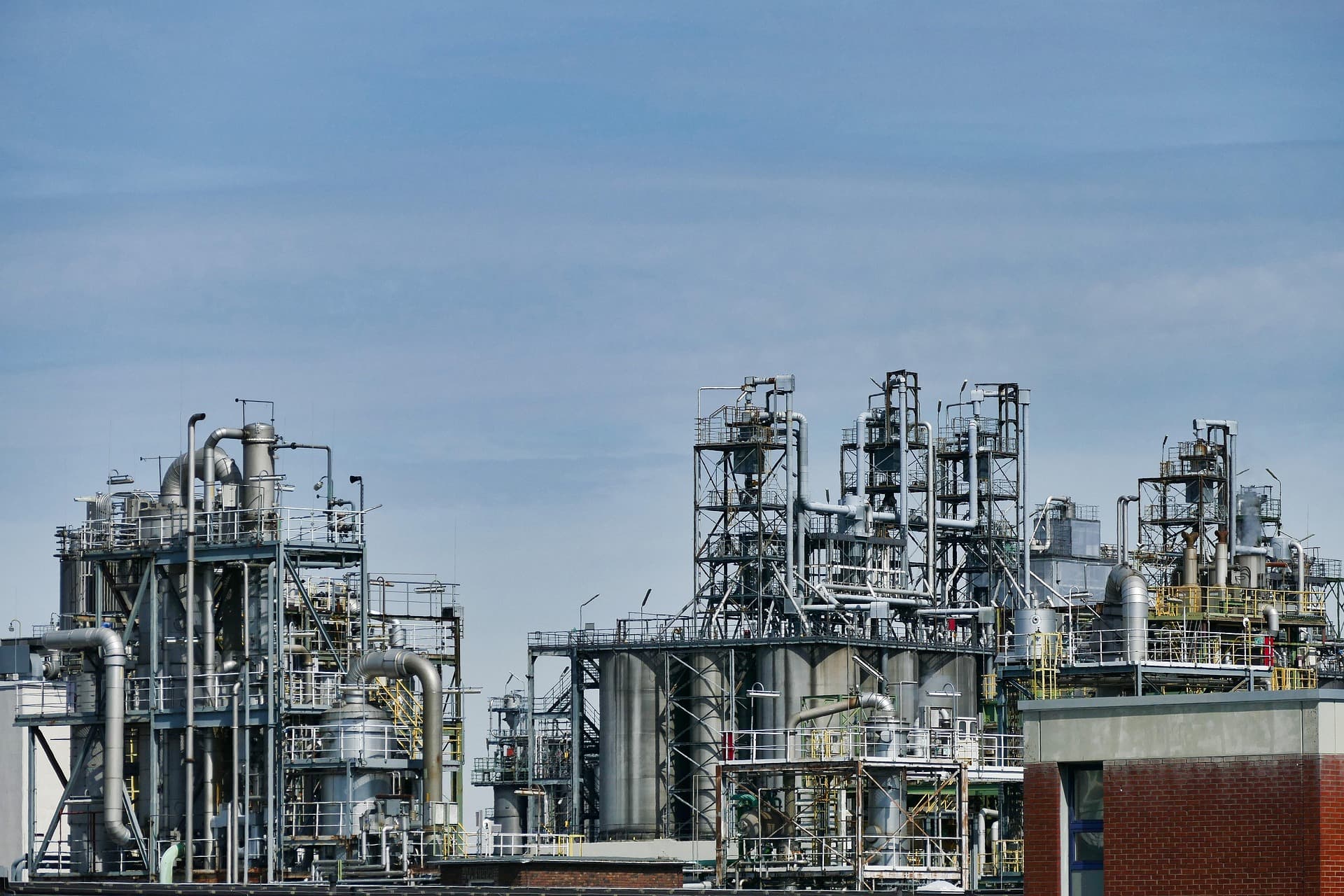
- Oil & gas production and refining where sulfur compounds, solvents, and brines are routine.
- Chemical processing with exposure to acids, caustics, and aggressive solvents.
- Valve tags and flow control equipment carrying the identification and pressure ratings that valve and flow control systems require.
- Food, beverage, and pharmaceutical production where sanitation chemicals and wash-down are daily.
- High-temperature industrial equipment — furnaces, boilers, exhaust systems, engine compartments.
- Lifting and rigging equipment built to the ASME B30 and OSHA inspection standards that permanent, legible marking demands.
- MIL-STD-130 UID nameplates for defense applications requiring maximum durability.
For less aggressive environments where the cost-performance tradeoff favors aluminum, see our Aluminum Nameplates.
Gallery
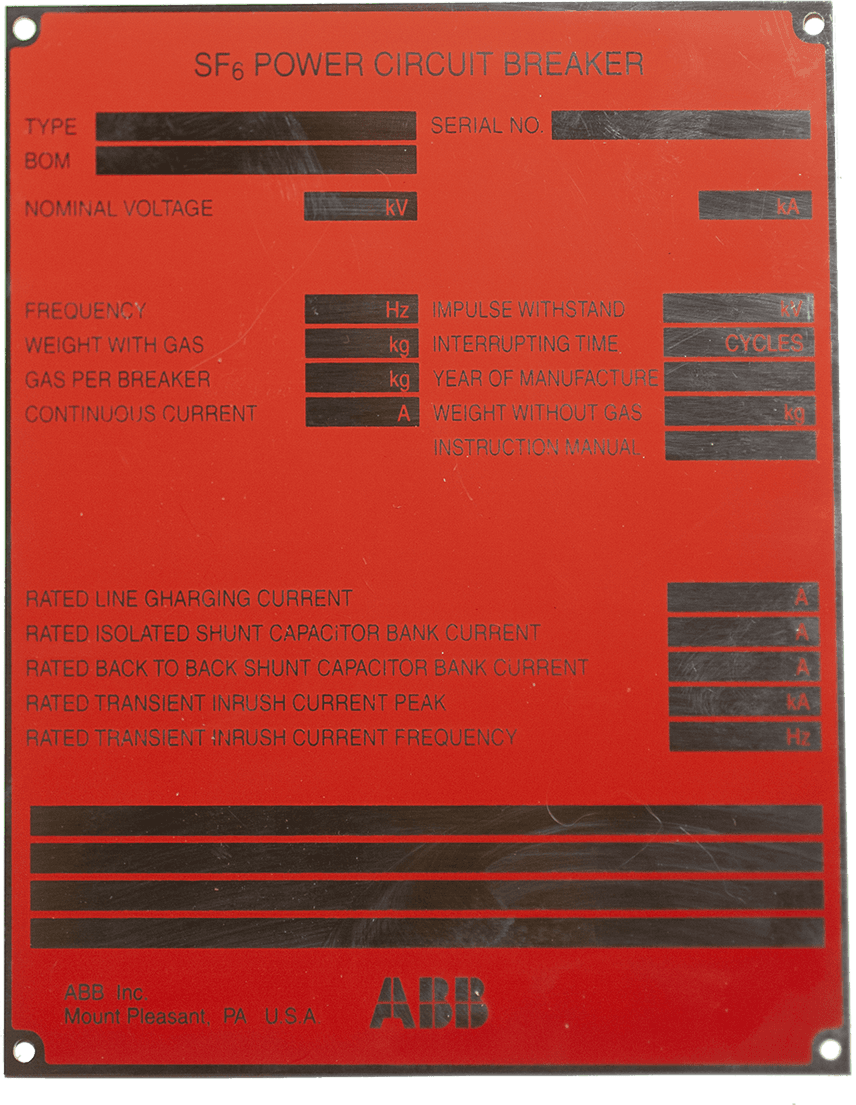
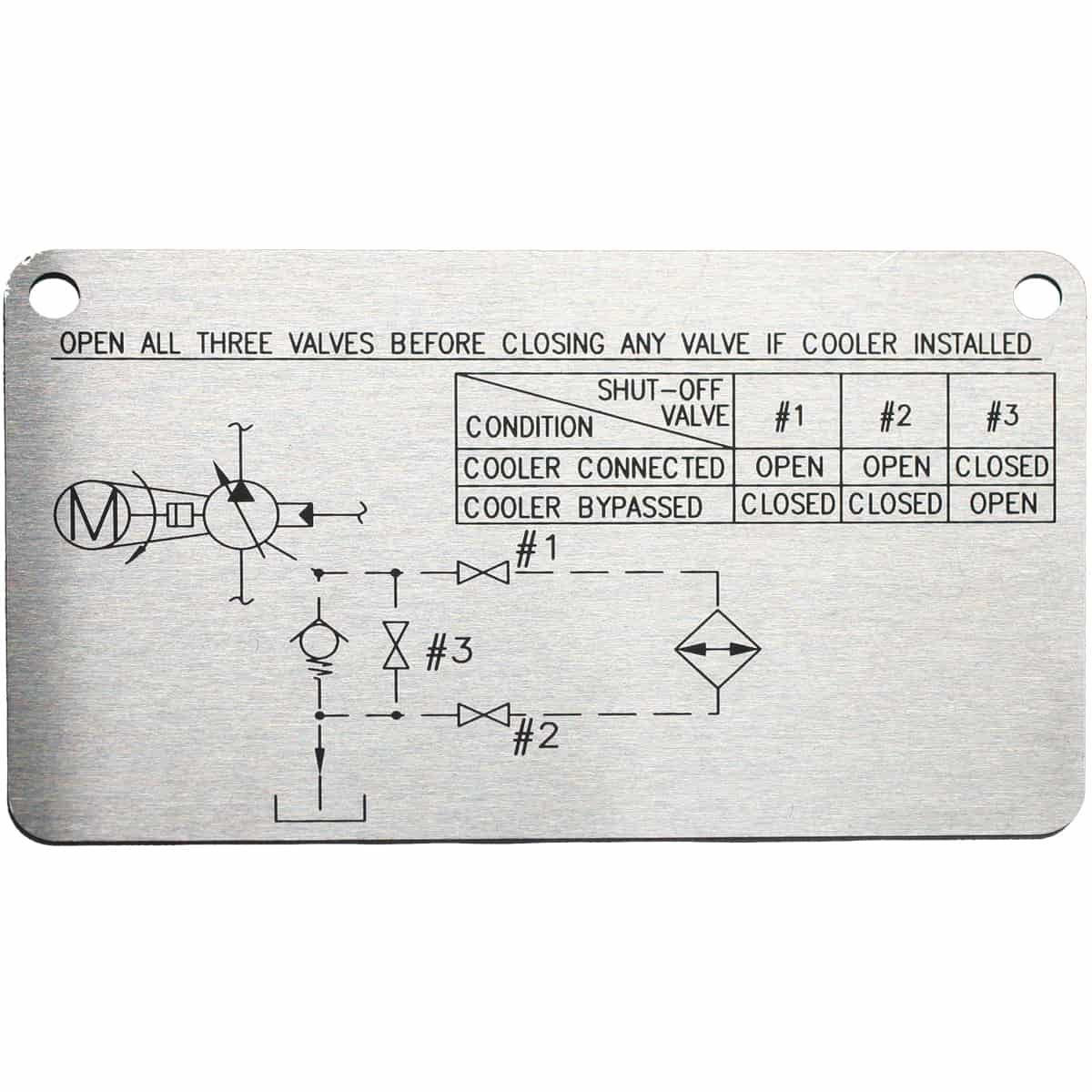
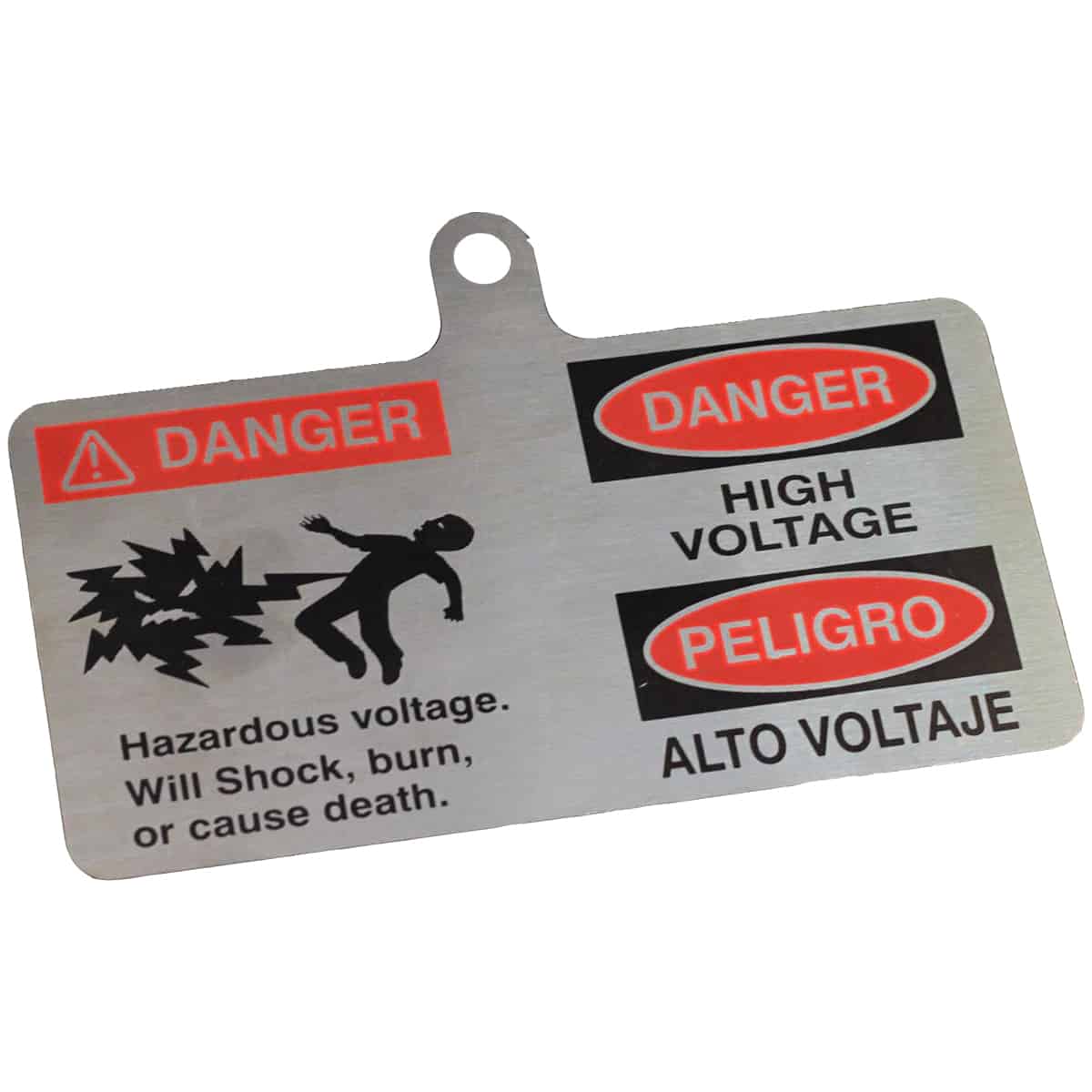
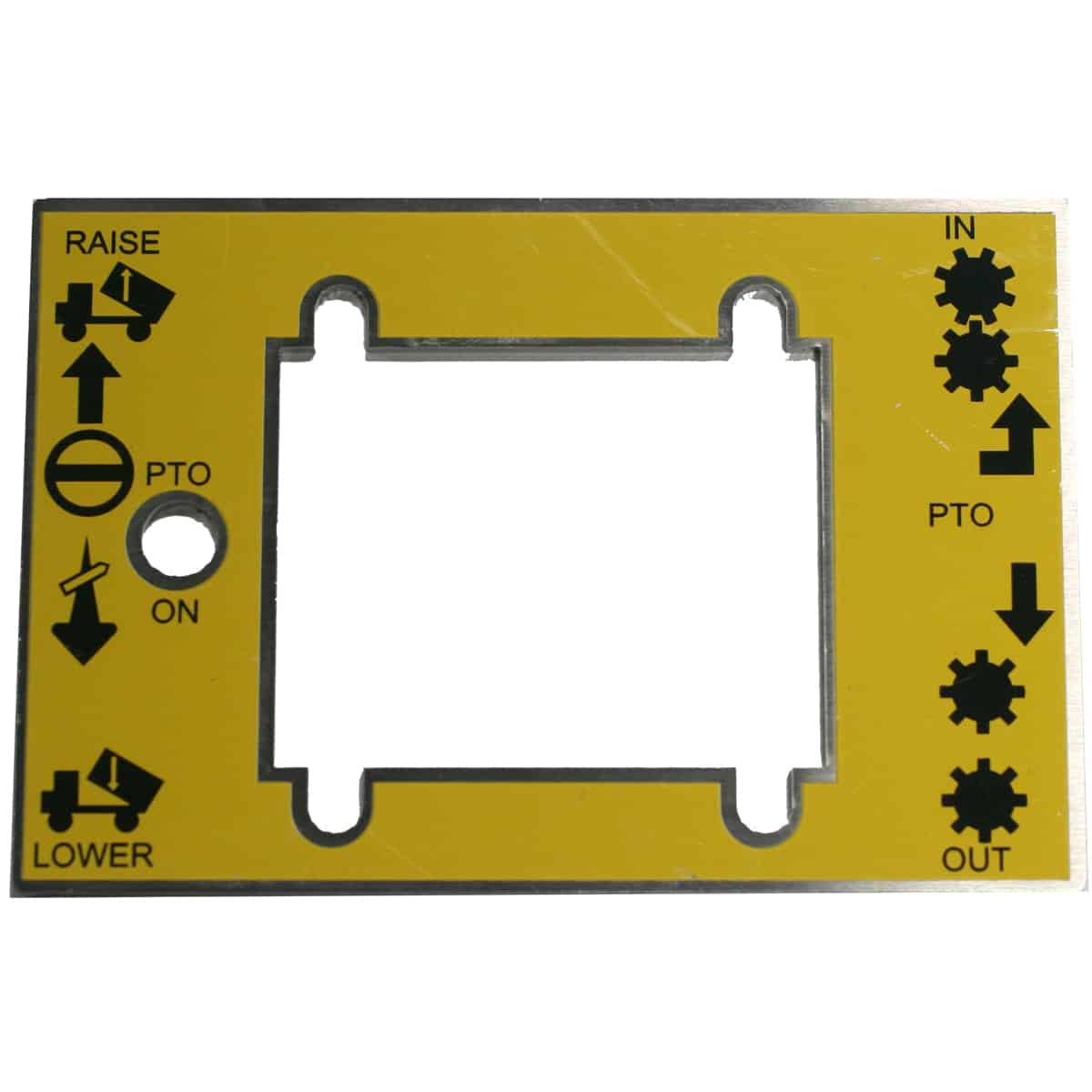
Material Specifications
| Specification | Details |
|---|---|
Standard lead time | 5 business days from art approval, 98% historical on-time delivery |
Thickness range | 200 series (cost-effective, good general corrosion resistance) 300 series (austenitic, non-magnetic, general-purpose) 304 (most common food-grade/general industrial, resists organic acids, caustics, atmospheric corrosion) 316 (higher-chromium, molybdenum-bearing — preferred for marine, chloride exposure, and chemical environments; resists pitting/crevice corrosion where 304 fails) |
Finishes | 2B (smooth, reflective cold-rolled, most industrial applications) #4 (brushed, directional grain, fingerprint/scratch resistant) #8 (mirror polished, high-visibility applications) |
Print & marking methods | Chemical etching with color fill (deepest, most durable — recessed and color-filled, survives abrasion/chemical exposure) Laser etching (high-resolution, ideal for Data Matrix/QR/fine detail, permanent, no color fill) Surface printing (digital/screen with overcoat, cost-effective for lower-exposure use) Sub-surface printing (print protected from surface abrasion) |
Materials compliance | ASTM A240 chromium-nickel stainless steel sheet and plate |
Shapes, Sizes, and Attachment
Custom shapes via in-house laser fabrication — no additional art or tooling charges. We produce stainless nameplates in any contour your application requires, including rectangular, round, oval, hex, and fully custom shapes.
Size range: From sub-1" component identification tags through large equipment rating plates.
Attachment options:
- Pressure-sensitive adhesive with high-performance 3M options for chemical and high-temperature environments
- Mounting holes for rivet, screw, bolt, or tie-wire attachment (most common for stainless plates)
- Welded attachment for permanent, tamper-resistant mounting
- Chain or cable attachment with formed eyelets for tagging equipment where direct attachment isn't possible
- Custom cutouts, slots, and mounting features
For lifting and rigging applications, we produce stainless tags with reinforced attachment eyes designed for the cyclic loading and environmental exposure those tags see in service.
Compliance and Certifications
Produced under our ISO 9001:2015 certified quality system. We support UL Recognized Component Labels on stainless substrate, MIL-STD-130 UID nameplates for DoD contractors (non-ITAR), and ASME/ANSI/NEMA/ASTM compliance including ASTM A240 material specs. Stainless is the most commonly specified substrate for ASME pressure vessel and piping nameplates.
Tell us your required standard at the quote stage and we'll confirm construction and documentation before production.
Frequently Asked Questions
304 is the standard food-grade and general industrial choice, resisting most organic acids, caustics, and atmospheric corrosion. 316 adds molybdenum for superior resistance to pitting and crevice corrosion; the right call for marine, chloride, or aggressive chemical exposure where 304 would eventually fail. 316 is also non-magnetic, like most 300-series stainless.
Yes, 316 stainless is our standard recommendation for continuous saltwater or chloride exposure, including offshore and marine equipment.
Yes, welded attachment is available for permanent, tamper-resistant mounting, in addition to adhesive, mechanical fasteners, and chain/cable attachment.
Stainless steel substrate tolerates far higher temperatures than printed aluminum. The practical limit depends on the marking method; laser etching and chemical etching (without color fill) survive the highest temperatures, typically well above 1,000°F.
Color-filled etched and surface-printed markings have lower limits. Contact us with your temperature specification for appropriate marking method selection.
Yes, 2B (smooth cold-rolled), #4 (brushed, directional grain), and #8 (mirror polished) finishes are all available depending on the application.
Yes, pressure-sensitive adhesive is available, including high-performance 3M options rated for chemical and high-temperature environments.
Request a Quote for Stainless Steel Nameplates
Send us your specification and we'll reply with pricing and lead time.